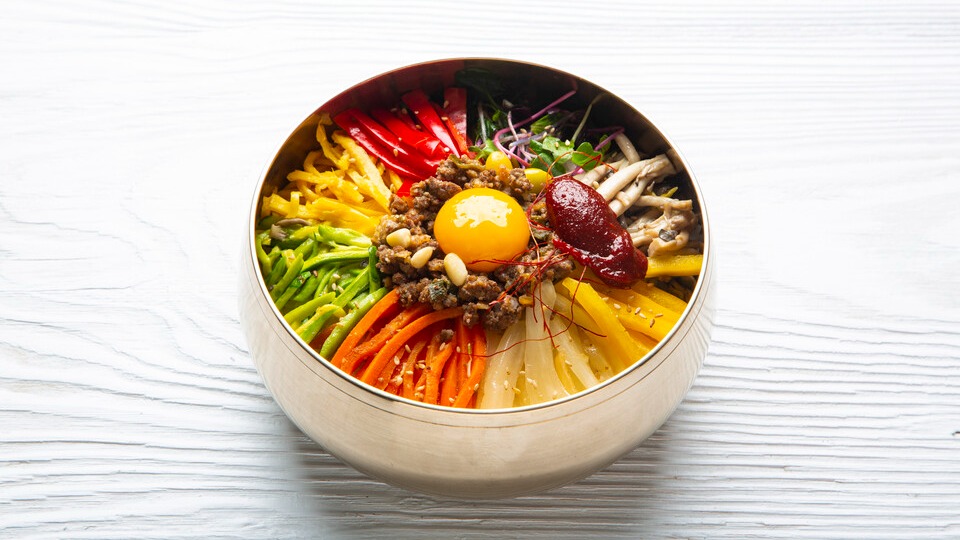
A healthy harmony of assorted vegetables and well-balanced ingredients! Try making Bibimbap, a classic Korean dish that combines warm rice with sautéed vegetables, seasoned meat(or go meat-free for a vegetarian version), and a spicy-sweet sauce. It’s not only satisfying but also a feast for the eyes!
📝 Ingredients
(Serves 1)
For the toppings:
- 100g pork, thinly sliced
- 1/5 zucchini, julienned
- 1/2 onion, thinly sliced
- 1/3 carrot, julienned
- 1 egg
- 1 bowl of cooked rice10,000 Recipe
For the sauce:
- 2 tablespoons gochujang (Korean red chili paste)
- 2 tablespoons soy sauce
- 1.5 tablespoons sugar
- 1 tablespoon sesame seeds
- 1 tablespoon sesame oil
- 1 tablespoon vinegar
🍳 Instructions
- Prepare the vegetables:
- Julienne the zucchini, carrot, and onion.
- Make the sauce:
- In a bowl, mix gochujang, soy sauce, sugar, sesame seeds, sesame oil, and vinegar until well combined.
- Sauté the vegetables:
- In a pan, add a pinch of salt and sauté the carrot until tender. Set aside.
- Repeat the process with the zucchini.
- For the onion, sauté with 1 tablespoon of soy sauce over medium heat until caramelized.10,000 Recipe
- Cook the pork:
- Season the sliced pork with salt and pepper. Sauté until fully cooked.
- Mix the cooked pork with a portion of the prepared sauce.
- Fry the egg:
- In a separate pan, fry the egg sunny-side up.
- Assemble the Bibimbap:
- Place the warm rice in a bowl. Arrange the sautéed vegetables and seasoned pork on top.
- Place the fried egg in the center.
- Add a spoonful of the sauce on top.
- Serve:
- Mix everything together before eating. Enjoy your homemade Bibimbap!
💡 Tips
- Feel free to customize the toppings with other vegetables like spinach, bean sprouts, or mushrooms.
- For a vegetarian version, omit the meat and add tofu or extra veggies.
- Adjust the spiciness of the sauce by varying the amount of gochujang.
 K-Home Cooking
Leave a comment